素材からはじまる
カポック|ふわりと軽い天然繊維 Kapok: A natural material that feels light and airy
2026/03/18
環境負荷の少ない植物 A plant with low environmental impact
無印良品では、木の実から生まれる繊維素材「カポック」を様々な商品に用いています。カポックはインドネシアをはじめ、東南アジアに広く生育する樹木です。病害虫に強いため、農薬をほとんど使用することなく、少ない水や肥料で育ちます。
Kapok is a fiber made from seed pods used in a variety of MUJI products. The kapok tree grows in Indonesia and widely throughout Southeast Asia. It is highly resistant to pests and disease, growing with little need for pesticides and requiring very little fertilizer or water.
そのうえ、葉だけでなく幹にも葉緑素を持っているので、多くの二酸化炭素を吸収してくれます。木の実を収穫してそのワタを利用するため、幹を伐採する必要がなく、環境負荷が非常に少ない素材として注目されています。
The leaves and trunk possess chlorophyll, allowing kapok trees to absorb and store large amounts of carbon. Additionally, the seed pods can be directly harvested, meaning the tree does not need to be cut down. As such, kapok has been gaining attention as a material with a low environmental impact.

このカポックから生まれる繊維の特徴は、とても軽いということ。世界で最も軽い天然繊維のひとつともいわれ、その重さはコットンのわずか1/8ほどです。古くからその軽さが重宝され、化学繊維に置き換わる前には、枕の中綿や救命胴衣の詰め物として利用されていました。今でも船舶に関係する方々は、救命胴衣のことをカポックと呼んでいるそうです。
The fiber produced from kapok is characterized by its light weight. It’s said to be one of the lightest natural fibers in the world, weighing just 1/8th as much as cotton. Before the prevalence of synthetic fibers, kapok was treasured for its lightness, often being used as padding for pillows and life jackets. Even today, those in the shipping industry often refer to life jackets simply as ‘kapok’.
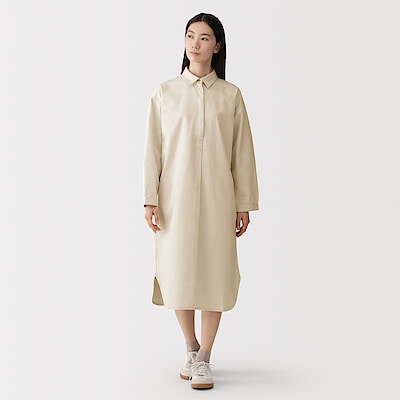
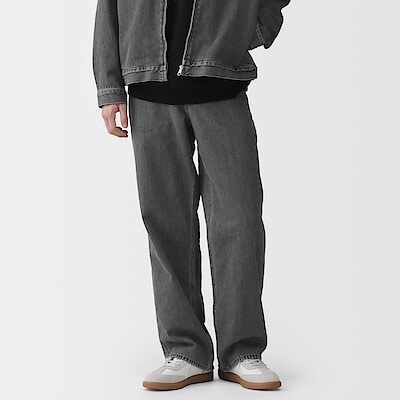
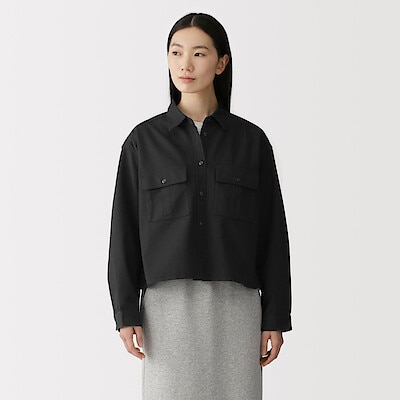
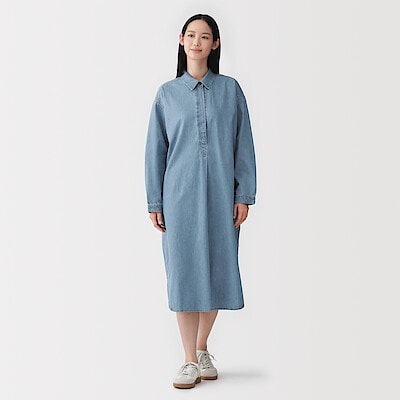
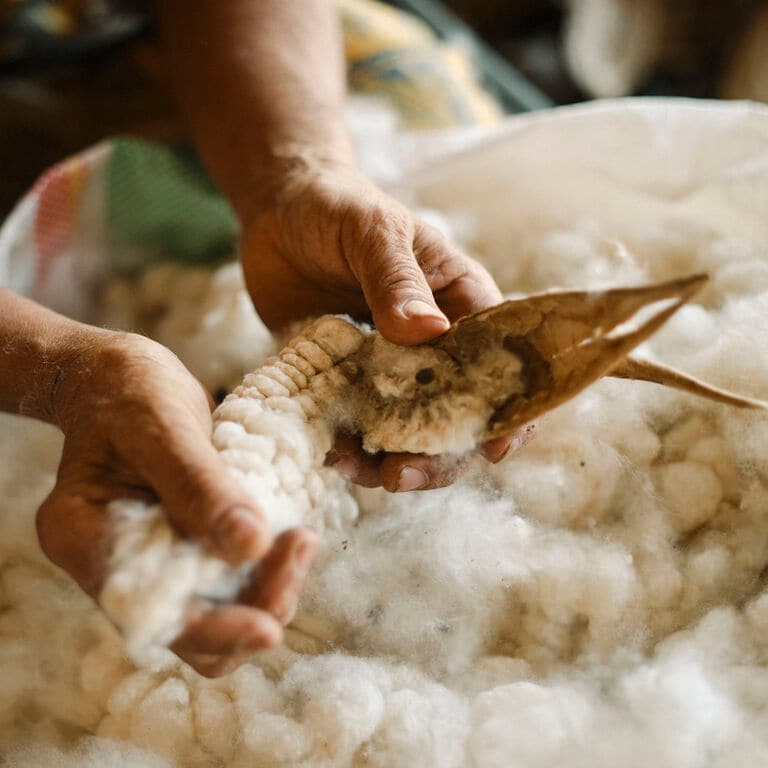
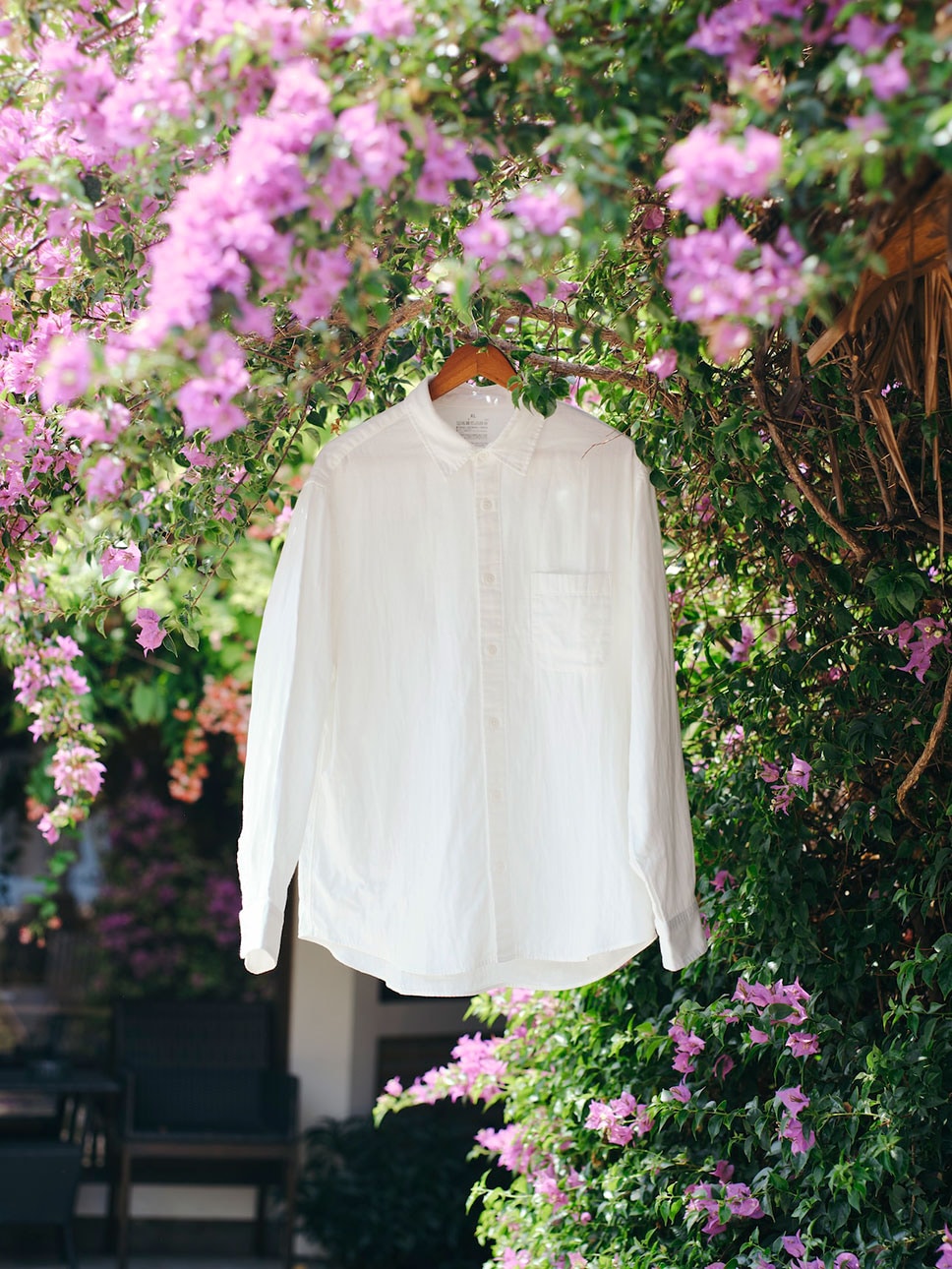
また、木の実から採れるワタ(繊維)の中が空洞のため、空気を多く含む特徴があり、寒い時には湿気を吸い、保温を助け、暑い時には湿気を放出し、快適な状態を保つことができます。無印良品ではこのカポックを衣服や寝具などに用いて製品としています。
In addition, the fiber taken from the seed pod is hollow and full of air. This helps it to absorb moisture when it’s cold, retain heat, and release moisture when it’s hot, keeping the user comfortable in all conditions. MUJI uses kapok in a variety of goods, including clothing and bedding.
インドネシアにカポックを訪ねる Visiting Kapok in Indonesia
無印良品で使用するカポックの多くが収穫されるインドネシア。世界第4位の人口を誇る国です。大小17,500以上の島々からなり、300以上の民族が居住する多様性にとんだ国でもあります(出典:国土交通省国土政策局)。
MUJI sources the majority of its kapok from Indonesia. A diverse country, Indonesia is the world’s fourth most populous country and is made up of over 17,500 islands inhabited by more than 300 ethnic groups (source: Ministry of Land, Infrastructure, Transport and Tourism).
乾季の終わりにあたる9月、このインドネシアを訪ねました。街には車以上に多くのバイクが行き交い、スパイス市場から発展したというマーケットには人があふれかえっていて、これから発展していこうという人々の活力を感じます。
We visited Indonesia in September, at the end of the dry season. The streets were filled with motorbikes, which outnumbered the cars. The market, whose origins are said to stem from an old spice market, is overflowing with people. There is an energy and passion that can be felt in the air.
けれど、都市部からカポック農園がある郊外へと進むにつれて、のどかな田園風景が続くようになります。やがて車窓に目をやると、道路の傍らに大きなカポックの木が実をつけていることに気づきました。巨大なカポックの木はインドネシアの人々にとって決して特別なものではなく、人々の暮らしの中に自然に存在していました。
However, as you transition from the city to the countryside where kapok plantations are cultivated, you begin to find yourself surrounded by a peaceful rural landscape. Peering out the train window, large kapok trees bearing fruit can be seen, lined up by the side of the road. The giant trees are impressive, but for the locals, it’s just an everyday sight.
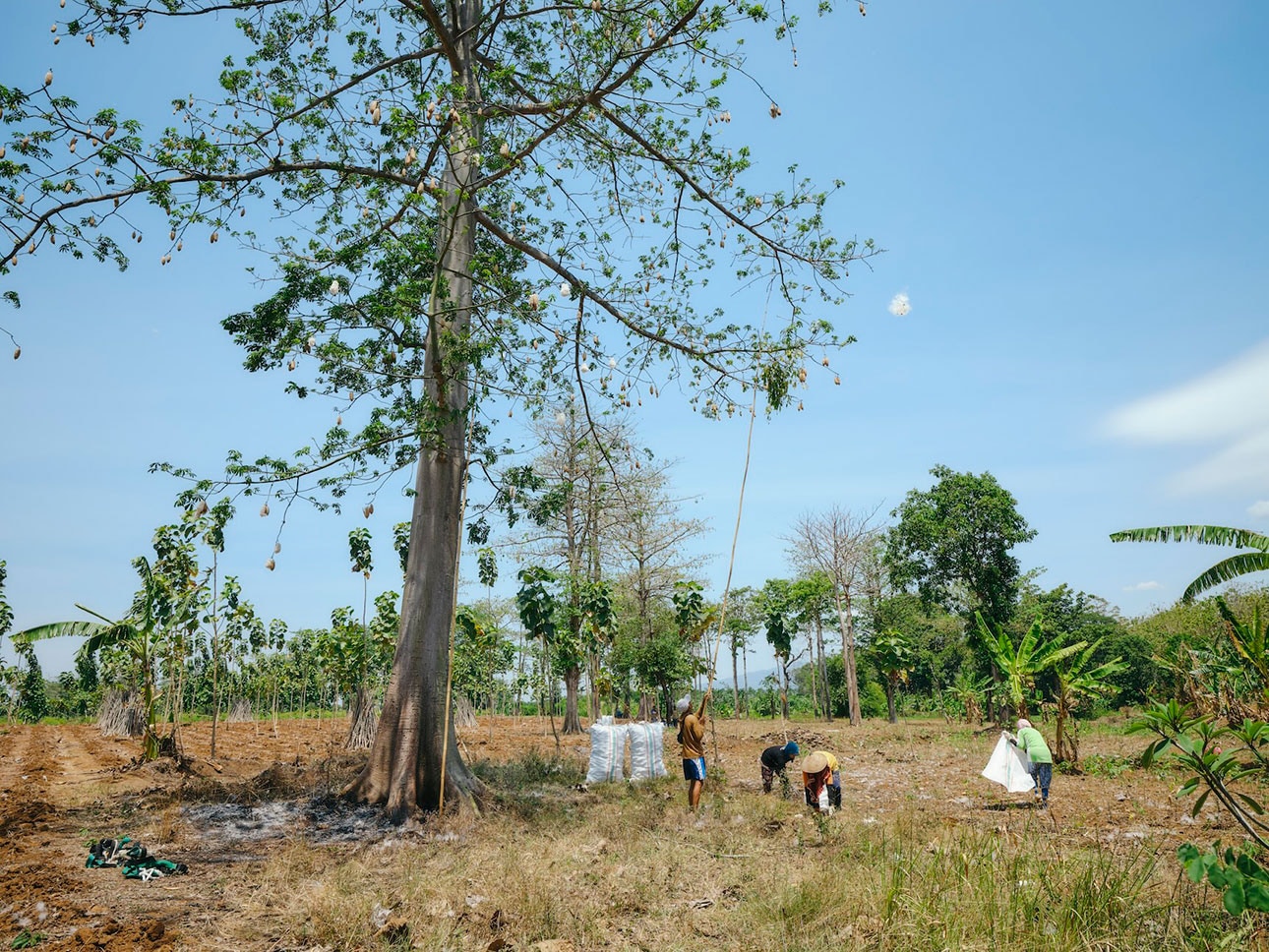
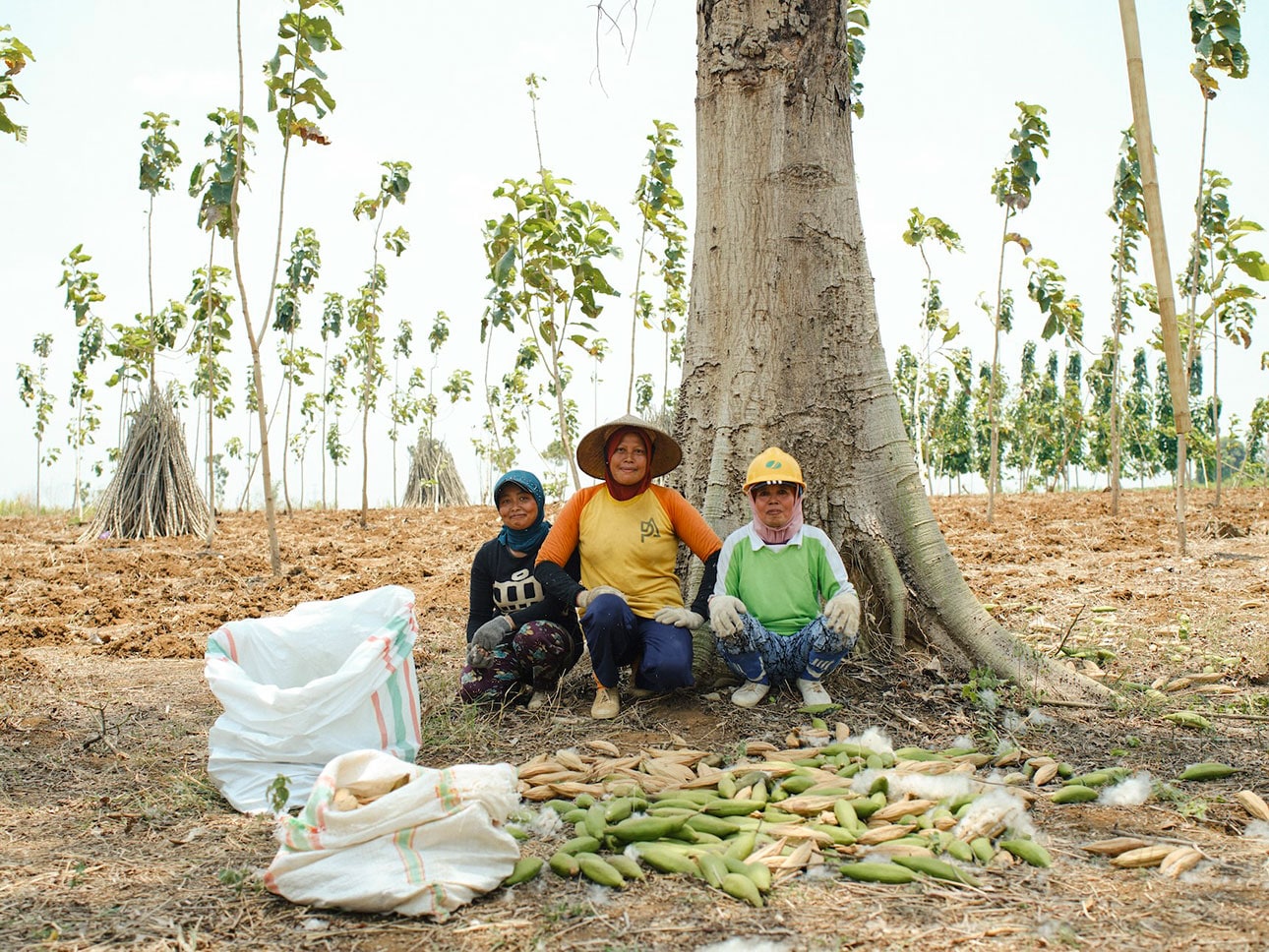
農園では、人々を見守るように佇むカポックの大木に茶色く熟した実がたわわにみのり、収穫を待っています。収穫するのは、主に地元の農家の方々。自然のままで育つカポックは手間いらずで、普段は畑を耕す農家が、収穫期だけは兼業でカポックの実を集めるのだといいます。
At the plantation, the huge kapok trees are laden with brown, ripe fruit, waiting to be harvested. The harvest is mainly conducted by local farmers. Kapok trees grow in the wild with very little need of intervention. And so, farmers who usually work on farms collect the fruit as a side job.
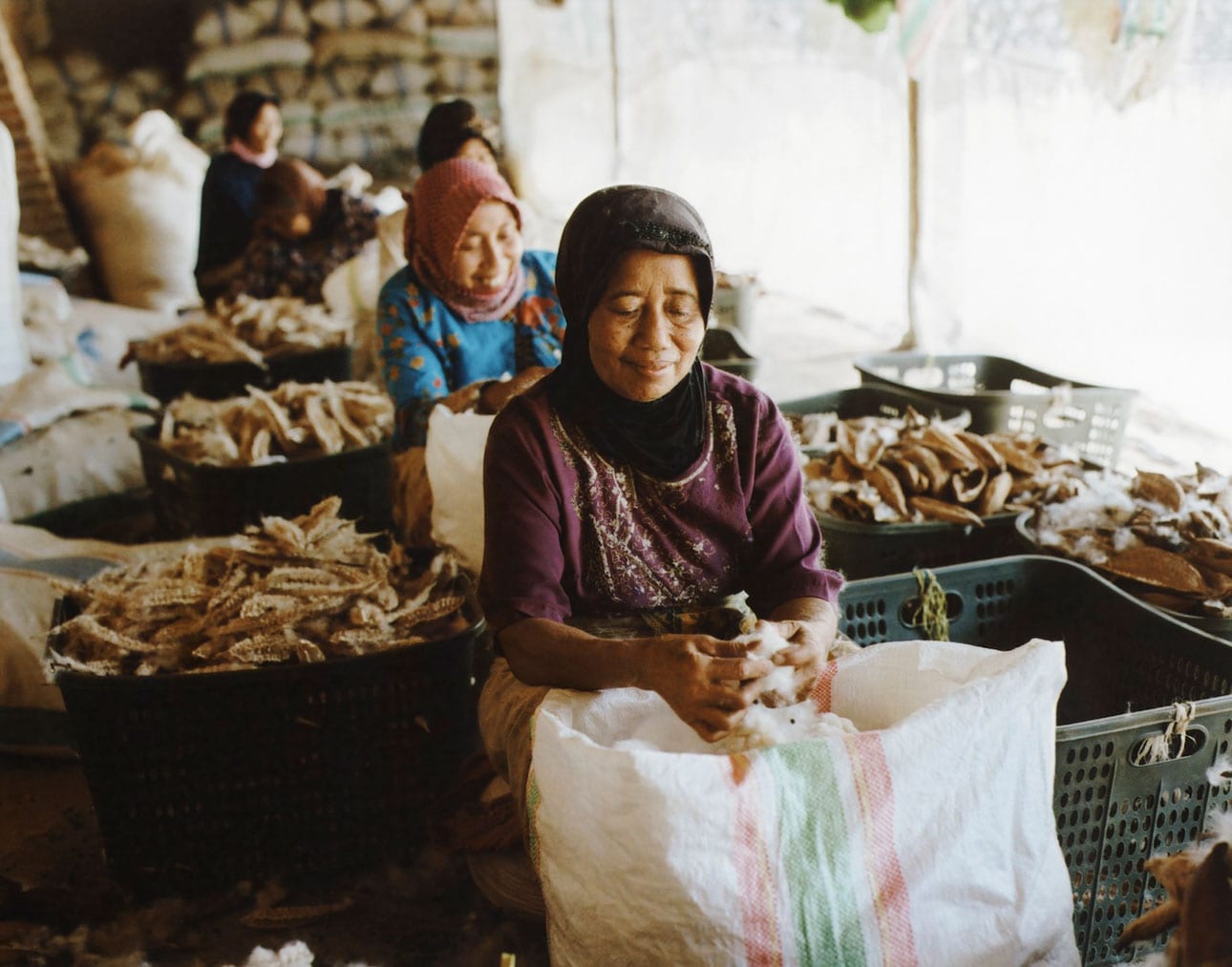
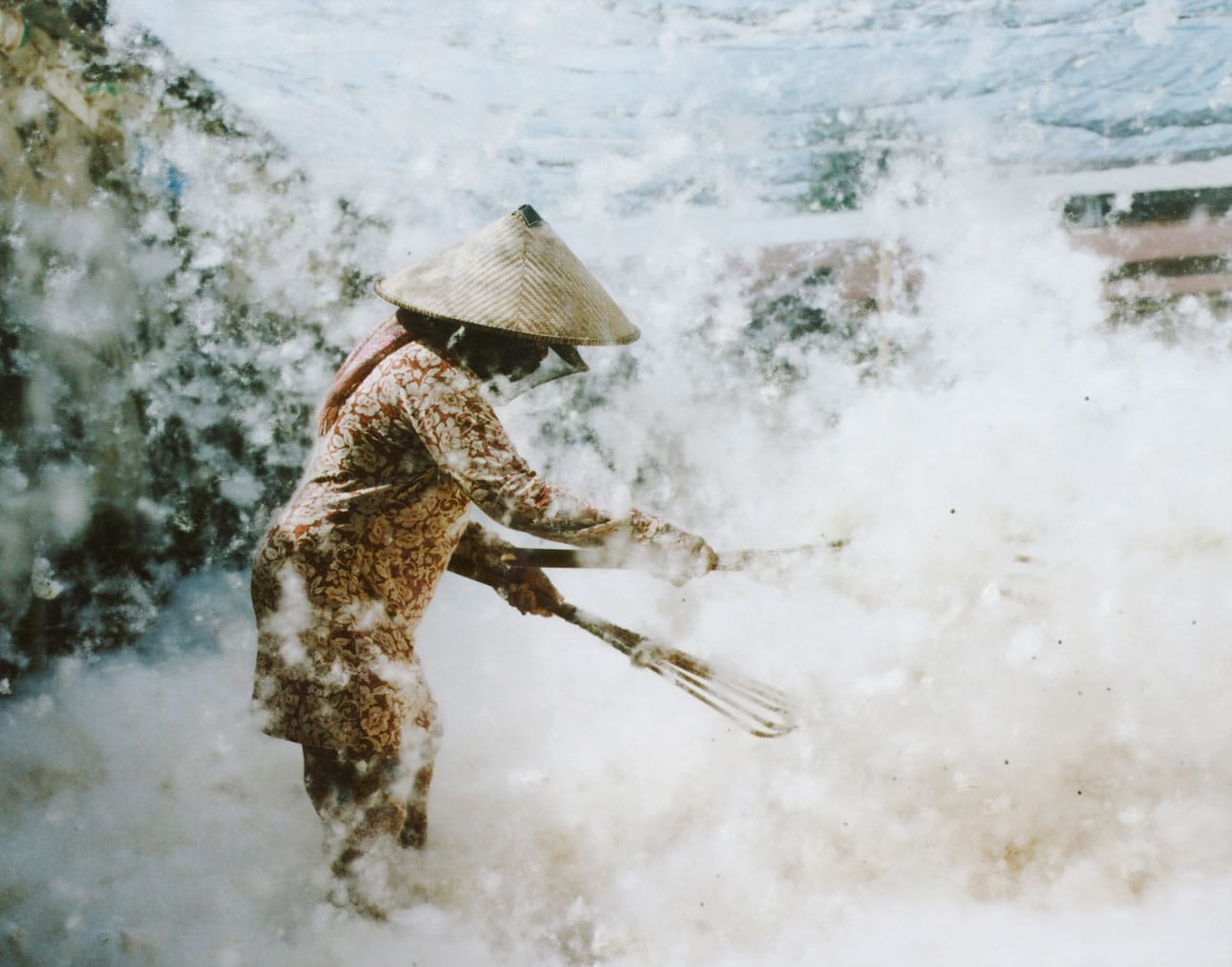
収穫されたカポックの実は、加工工場へと運ばれます。工場とはいっても、そのほとんどは煉瓦作りの昔からある加工場です。ここでは熟したカポックの鞘(さや)を割り、中のワタを取り出す工程が手作業で行われていました。
The harvested seed pod is taken to a processing facility. These facilities resemble old factories with their all-brick facades. Here, the ripe seed pods are split open and the cotton fibers are removed by hand.
取り出したワタは、太陽の下で乾燥させる「サンドライ」という工程を経て、風を吹かせて品質を仕分ける「ブロウ」という工程へと移されます。風に乗って遠くへ運ばれた繊維ほど軽いというわけです。
The cotton is then left in the sun to dry in a process called ‘sundry’, before moving onto the ‘blow’ process, where strong winds are used to blow the cotton, helping sort it by quality. The further away the cotton is blown, the lighter it is.
高い紡績技術 Advanced spinning technology
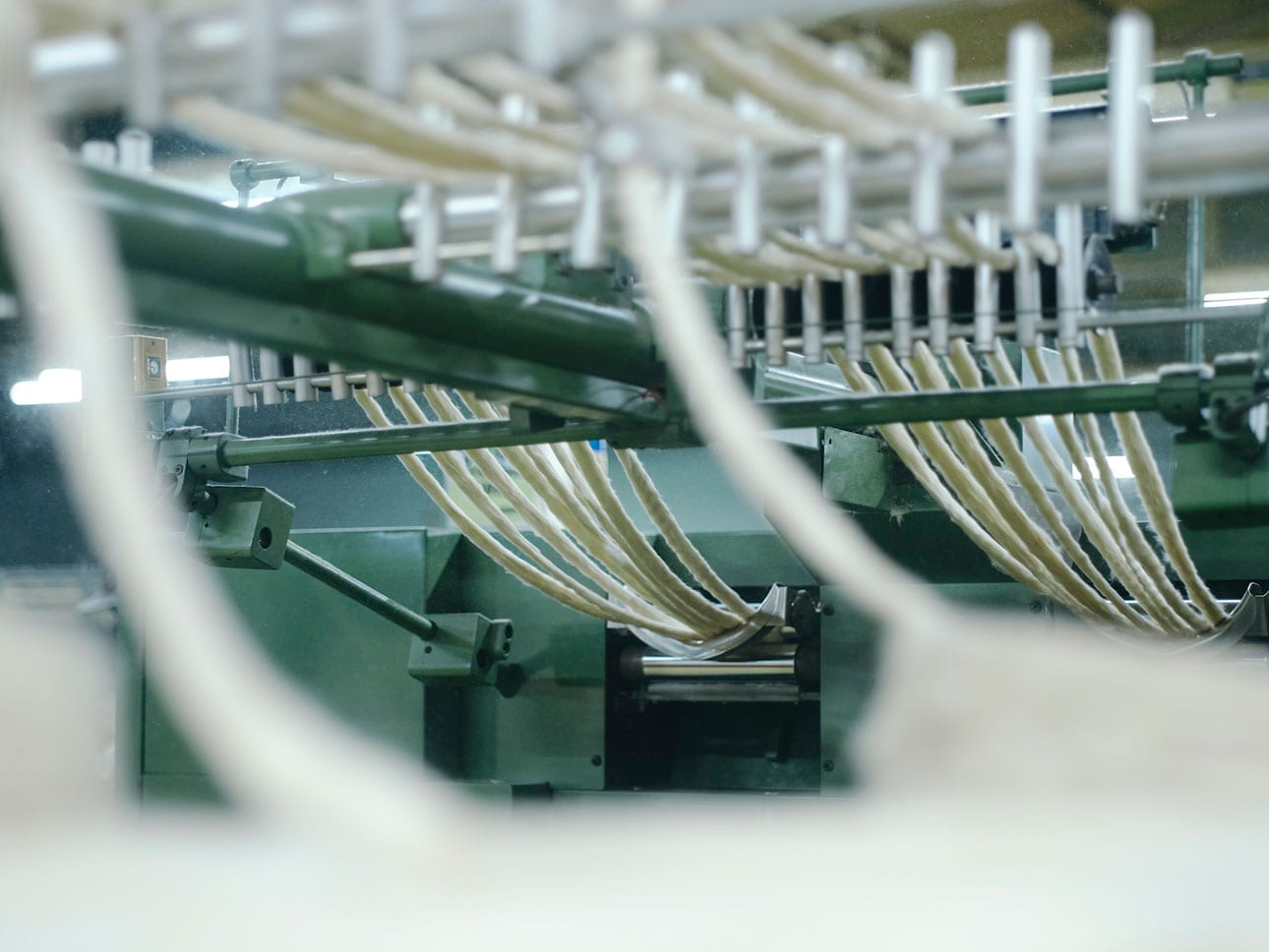
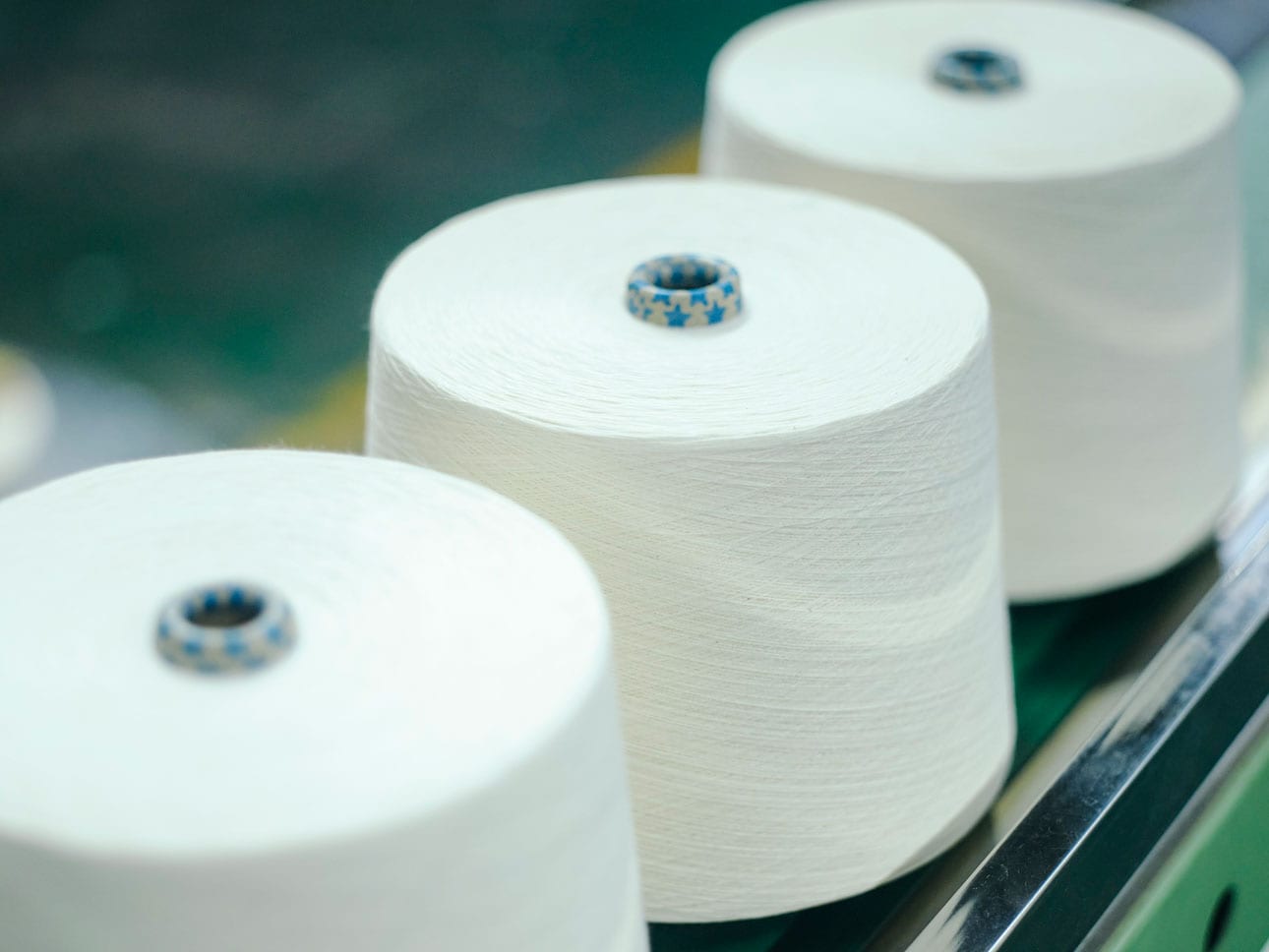
こうして集められた質の高いカポック繊維だけが、糸を作る紡績工場へと運ばれます。カポックの紡績には特別な工夫が施されています。軽くて繊維長の短いカポックは、撚り合わせて糸にするのがとても困難なのです。ですから、このカポックの繊維をコットンの繊維で巻き込むようにして紡績するという高い技術が必要になります。
Only the high-quality fibers will make their way to the spinning factory to be spun into thread. It’s very difficult to twist the typically short and lightweight kapok fibers, so special care is taken to produce the thread. A high level of skill is required to spin and wrap the fibers. Up until now, kapok has mainly been used as a material for padding.
この技術によって、これまで主に中綿としての使用が中心だったカポックに、糸として利用するという新しい光を当てることができるようになりました。
However, this development in technology shines a new light on kapok as a material that can be utilized as thread in a wide variety of goods.
こうして生まれたカポックの糸は、無印良品の服飾雑貨や寝具などの製品に活用されています。
The kapok thread, is used in a variety of MUJI products, from bedding to clothing and accessories.
← 前の記事へ