素材からはじまる
リネン|長く使うほど馴染む天然素材 Linen: A natural material that gets better with age
2026/02/16
地域に根差したリネンの原料 Locally sourced raw materials for linen
夏にヨーロッパの街を歩いていると、リネンを爽やかに着こなす人を多く見かけます。風を通して肌触りが良いリネンは、ヨーロッパや中央アジアで古くから愛されてきた天然素材。水に濡れると強度が増すため、丈夫で長く使うほどに風合いが変化して肌に馴染みます。原料となるフラックス(亜麻)は、一般的に、栽培時に大量の水や農薬を必要としないため、環境負荷が少ない素材としても改めて注目されています。
Walking the city streets of Europe in summer, you’re bound to notice people wearing linen with a refreshing sense of ease. Linen, a natural fabric beloved for centuries in Europe and Central Asia, feels great against the skin and allows for great airflow. Linen becomes stronger when wet, making it durable, with its texture becoming more and more comfortable the more it’s worn. Flax, the raw material from which linen is derived, generally requires little water and pesticides during cultivation, giving it renewed attention as a material with low environmental impact.
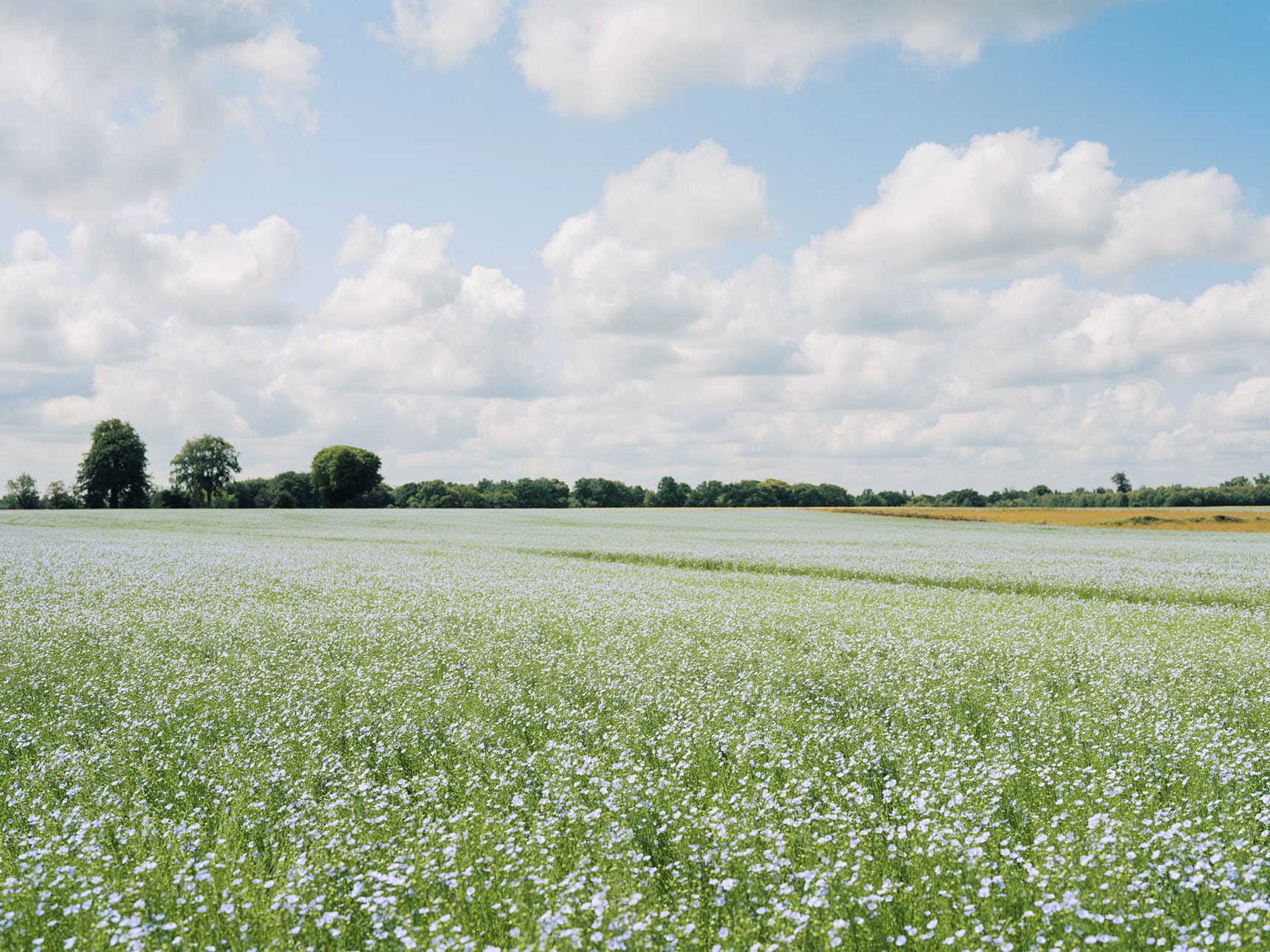
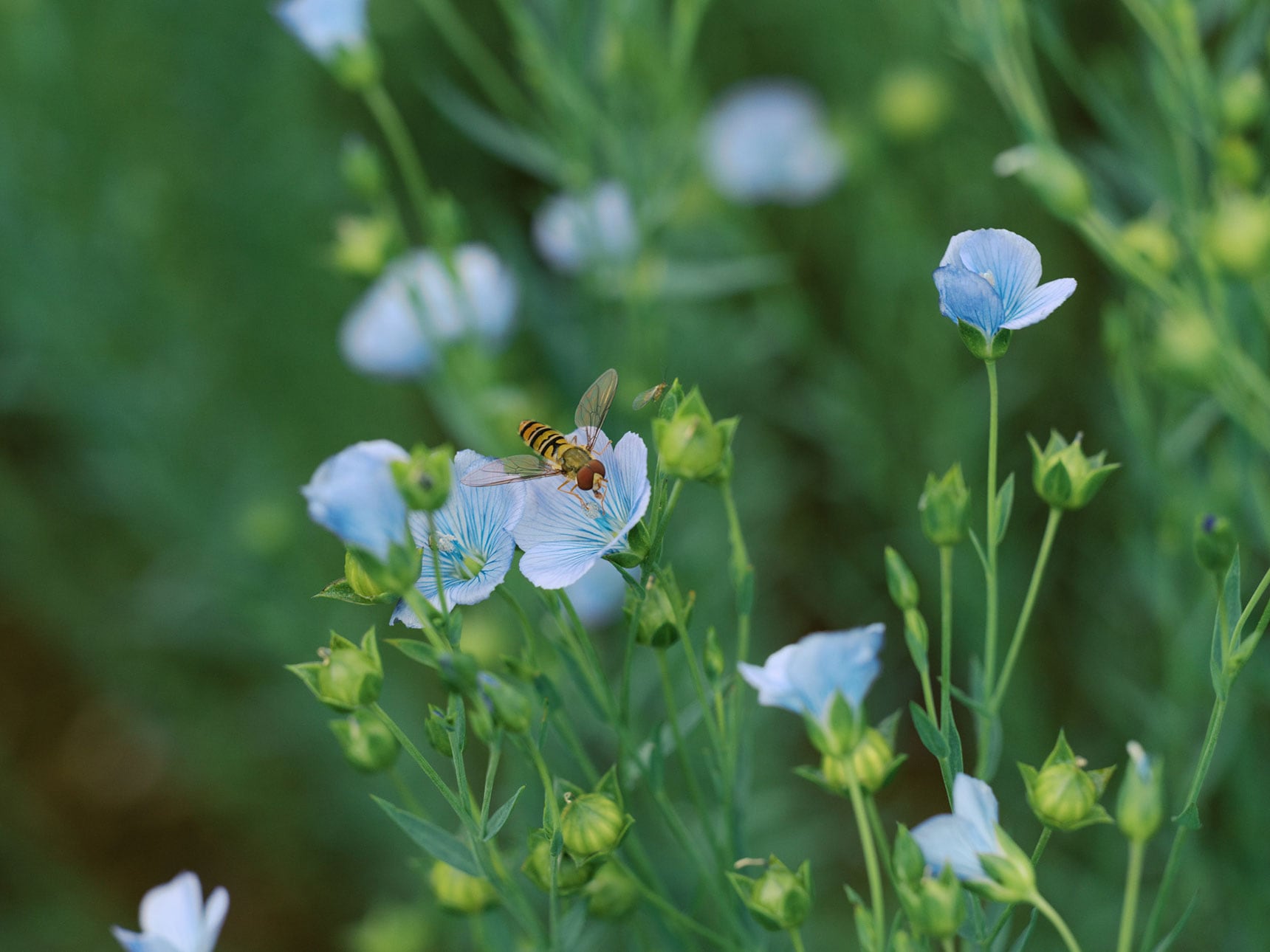
私たちは、リネンの原料となるフラックスの主な産地であるフランスのノルマンディー地方を訪ねました。世界のフラックスの約60%は、ここフランスで栽培されているそうです。
We visited the Normandy region of France, a major production area for flax, the raw material for linen. Approximately 60% of the world's flax is said to be cultivated here in France.
案内してくれたのは、地域の農家からフラックスを買い集めて繊維を取り出す「スカッチング」と呼ばれる工程を行う会社(スカッチャー)の方です。スカッチャーは農地に根差し、毎週のように生産者を訪ね、リネンの育て方を指導したり、作物の状況を確認したりする要の存在。この会社は家族経営で、現在は5代目になるそうです。
During our time here, we were guided by a representative of a ‘scutcher’ company. A ‘scutcher’ buys flax from local farmers and performs a process called ‘scutching’, the method in which fibers are extracted from flax. Scutchers are pivotal figures in the farming community, visiting producers weekly to advise on linen cultivation whilst also assessing crop conditions. This particular company is family-run and is now in its fifth generation.
繊細な品質管理 Delicate quality control
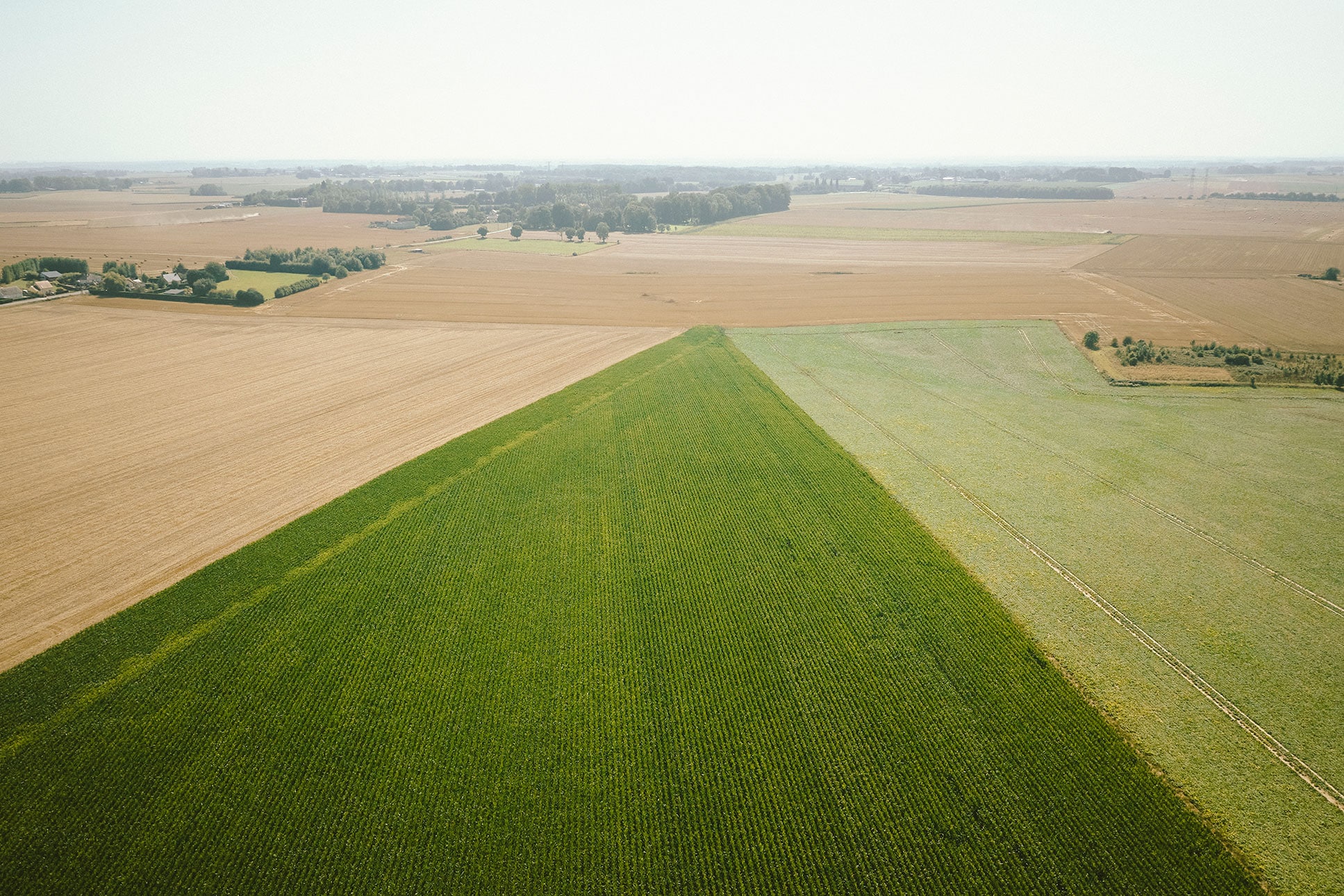
フラックスの栽培には土がとても重要で、種を蒔くまでには、6〜7年をかけて土づくりをします。ジャガイモ、とうもろこし、小麦、ビーツなどを輪作することによって、土地が痩せることなく、必要な養分を蓄えるように工夫されているのです。
Soil is crucial for growing flax, and it’s said that preparing the soil takes six to seven years before the seeds can be sown. By practising crop rotation with potatoes, corn, wheat, and beetroot, the land is maintained without becoming depleted, ensuring it accumulates the necessary nutrients.
準備が整った土地に、3月から4月にかけて種を蒔きます。種を蒔いたら雨に頼り、余計な灌漑はしません。気温が低く、晴れと雨を繰り返すノルマンディー地方の気候が、フラックスを育てます。
Seeds are sown in the prepared soil from March to April. Once sown, they rely on rain, without the need of additional irrigation. The climate of the Normandy region, which has low temperatures and alternating sun and rain, helps the flax grow.
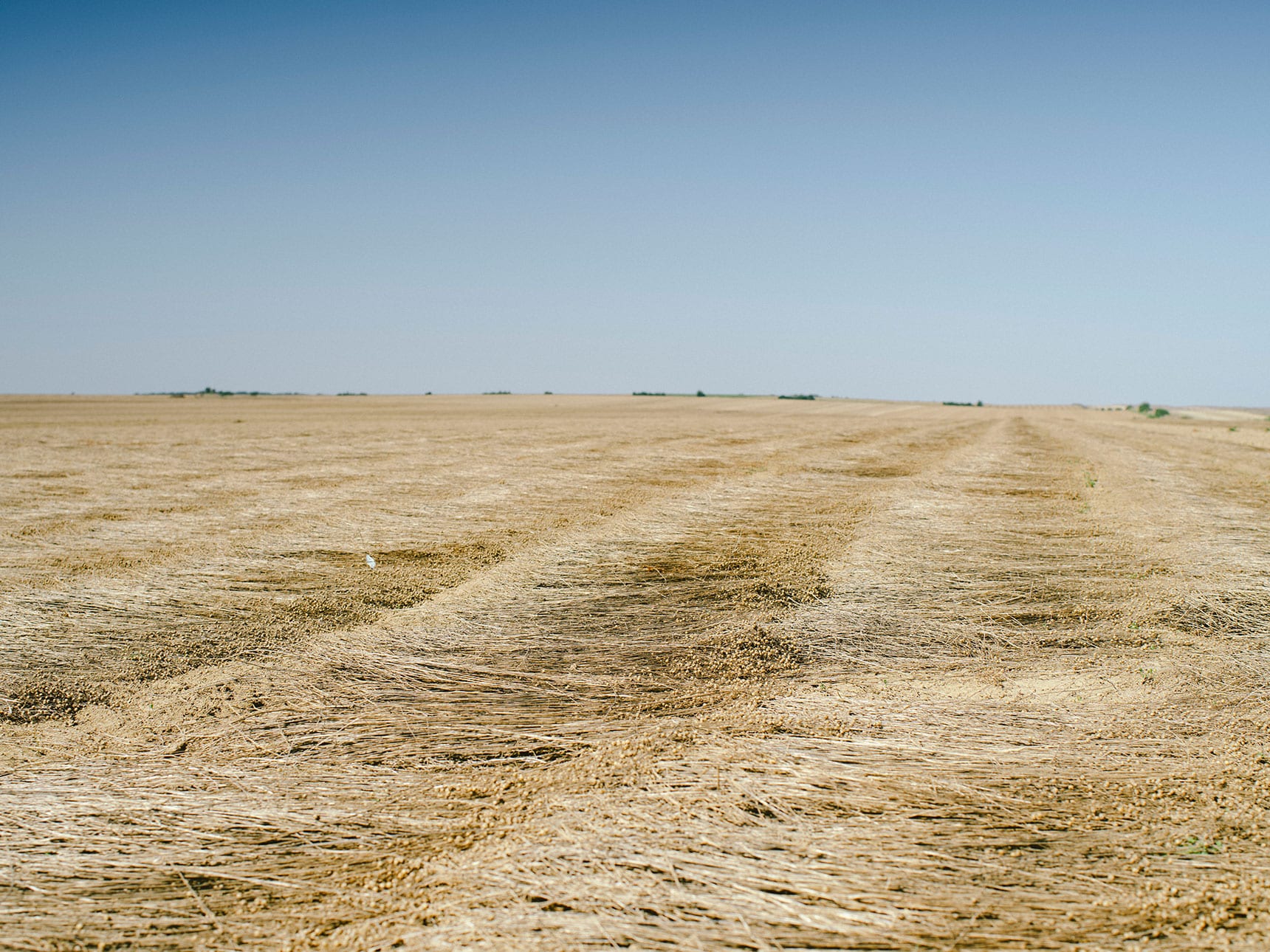
フラックスは生育が早く、6月には草丈が1.2mほどになって美しい花を咲かせます。7月半ばには地面から抜き取り、1ヶ月ほど畑で寝かせて、太陽の光と適度な雨風、そして微生物の力も借りて発酵させる「レッティング」という工程に入ります。こうすることで、必要な繊維を取り出しやすくするのです。
Flax grows quickly, reaching a height of approximately 1.2 meters by June, producing beautiful flowers. By mid-July, it’s pulled from the ground and undergoes a process called ‘retting’. This involves leaving it in the field for about a month, where it ferments with the help of sunlight, moderate rain, wind, and microbial activity. This makes it easier to extract the necessary fibers.
発酵が少ない場合は黄色っぽく、進むと黒っぽくなっていくため、状態を見ながら裏返すといった丁寧な作業が必要です。この発酵の具合によって、繊維の色が決まるのだといいます。
If fermentation is insufficient, the raw material appears yellowish and as the fermentation progresses, it darkens, becoming blacker. Careful attention is required, and the material needs to be checked as they are turned over. The color of the fibers are said to be determined by the degree of this fermentation.
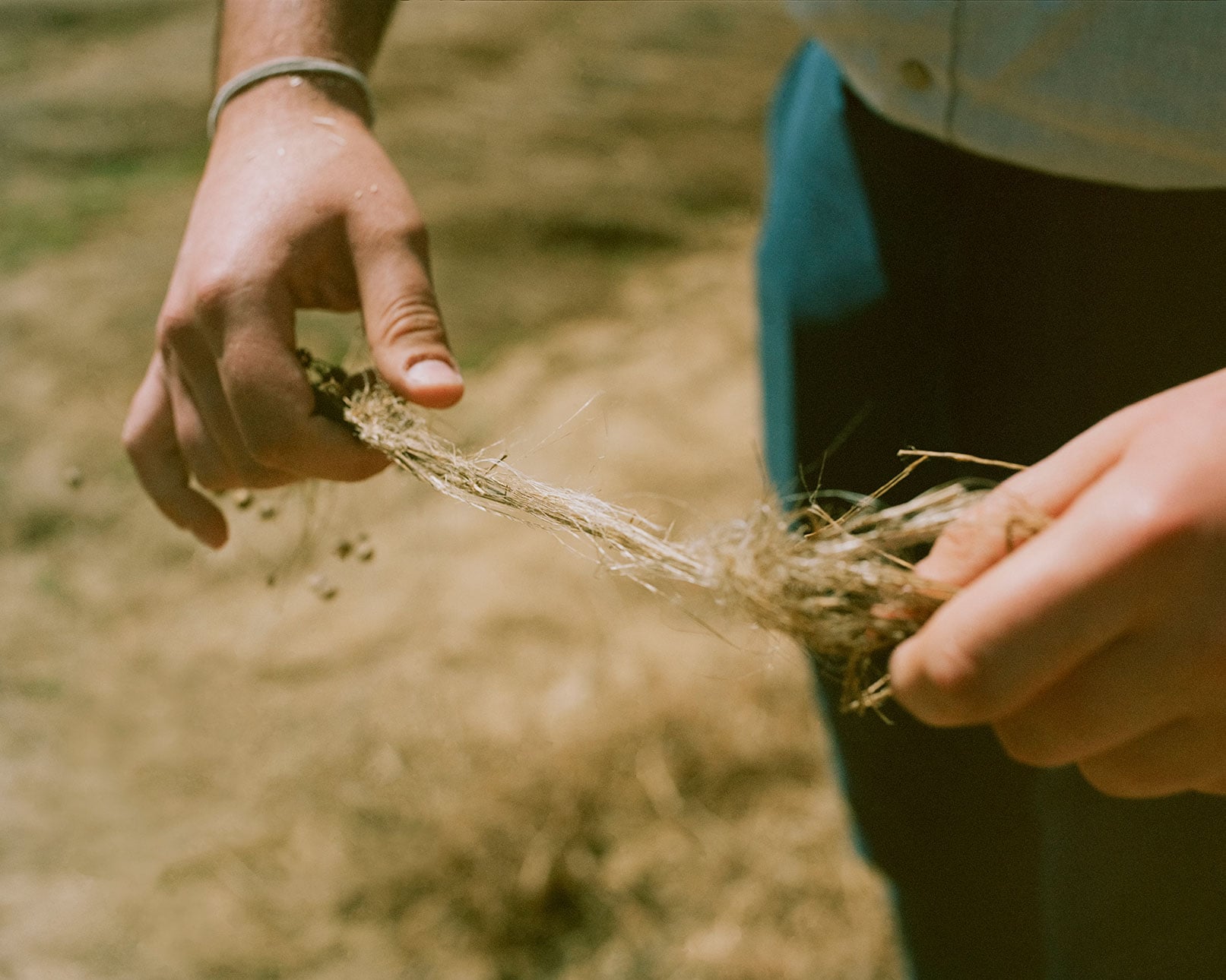
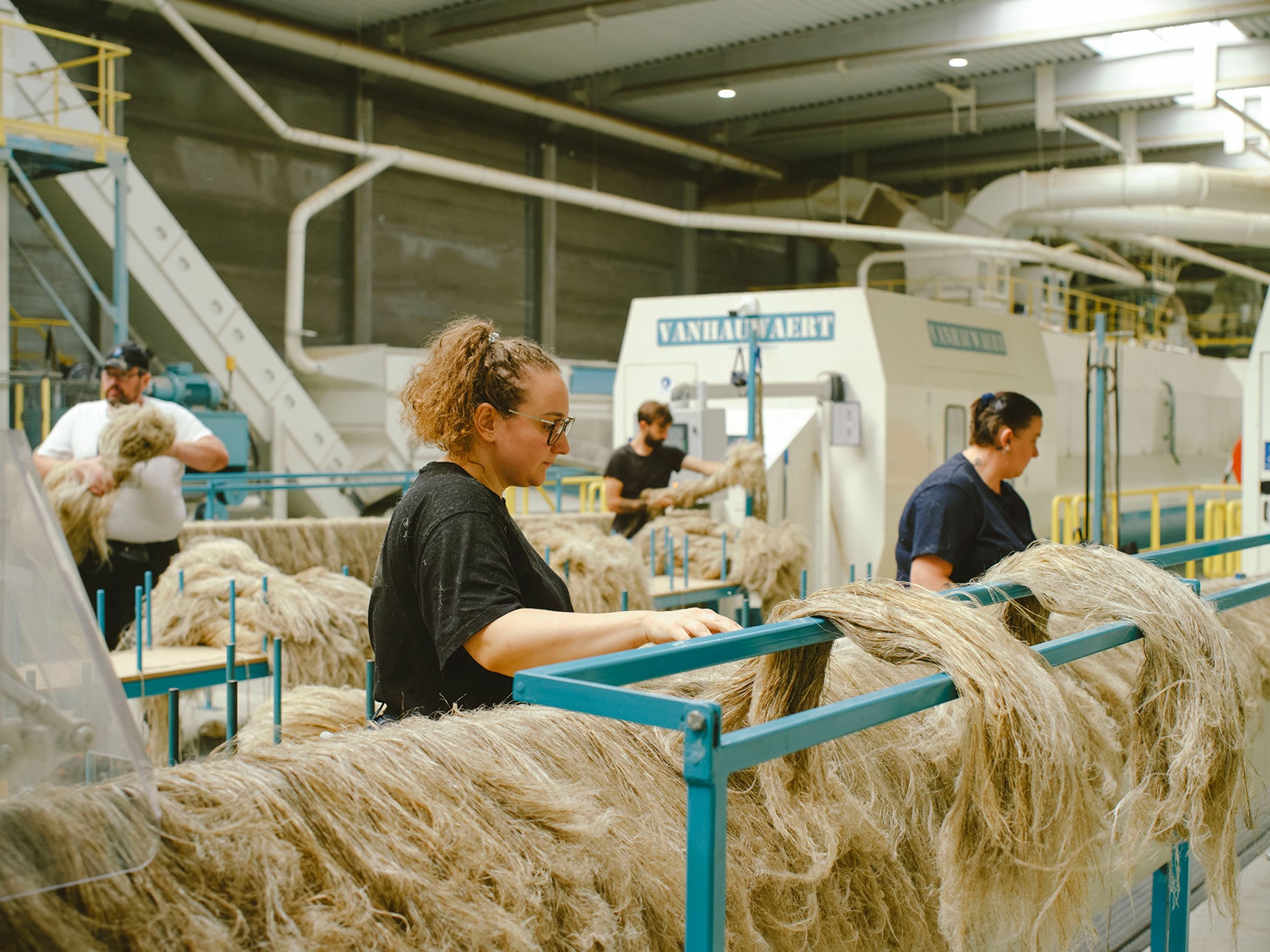
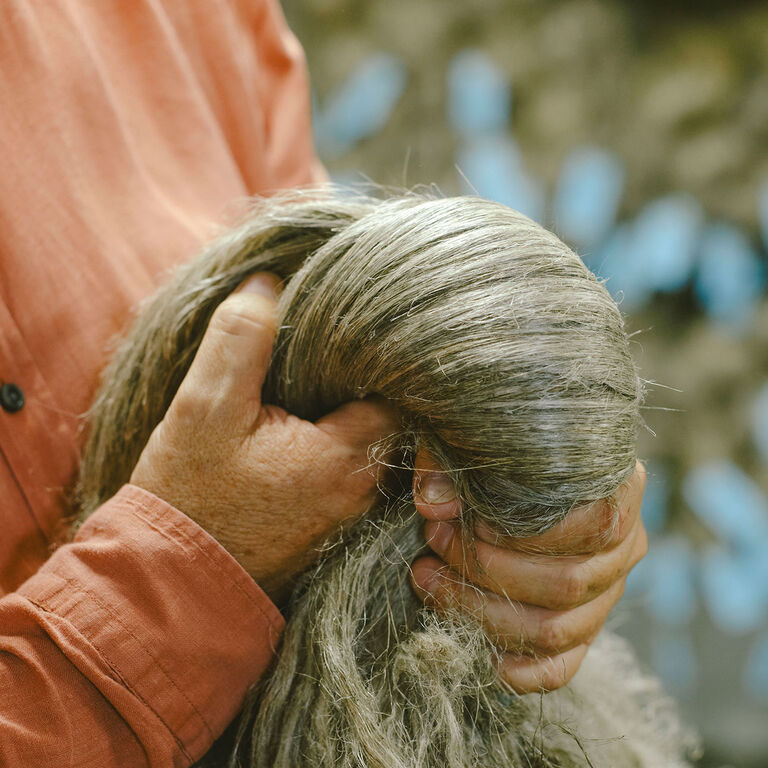
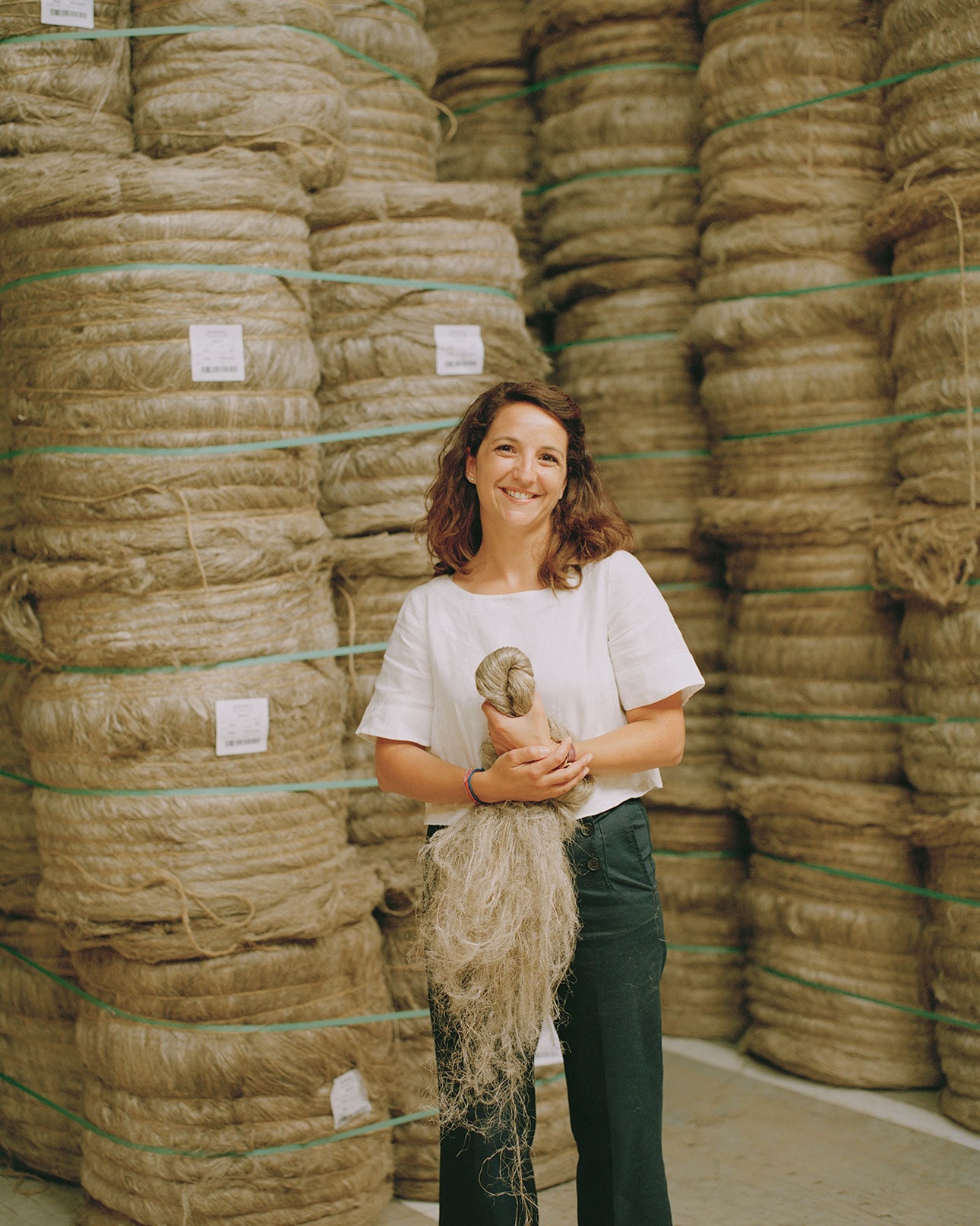
レッティングを終えたフラックスは、スカッチングによって必要な繊維を取り出します。繊維の品質は、主に性質や色、強さ、細かさとその均一性といった基準で評価されるそうで、品質管理を担えるようになるまでは通常7年ほどの経験が必要とのこと。
Once the retting process is complete, the flax is then scutched to extract the necessary fibres. The quality of these fibres are primarily assessed based on criteria that include, color, strength, fineness, and uniformity. It’s said that it typically takes around seven years of experience to be able to properly assess their level of quality.
ワインを評する時によく使われる“土地特有の味わい”のことをテロワールと言いますが、フラックスもワインと同じようにテロワールがあるのだといいます。スカッチング会社代表のヴァンサンさんが、品質を確かめるために繊維を引っ張りながら「繊維が歌う声が聞こえるんだよ」と誇りを持って話してくれました。
‘Terroir’ is a term often used when evaluating wine, meaning "the unique flavor of the land," but flax is also said to have its own terroir, just like wine. Vincent, the representative of the scutching company, spoke with pride as he pulled on the fibres to check their quality, remarking, “You can hear the fibres singing!”
使うほどに馴染む素材 A material that gets more comfortable with use
フラックスの生産の多くがフランスで行われている一方で、繊維から糸を作る工程のほとんどは中国の紡績工場が担っています。
While much of the world’s flax production takes place in France, the process of turning the fibers into yarn is largely carried out in Chinese spinning mills.
フラックスは濡らすと強度が増すため、水で濡らしながら繊維を撚り合わせて糸を紡いでいきます。こうして紡績された糸と織られた生地をリネンと呼びます。織りの工程でも、工場を水蒸気で湿度を保ちながら織り上げます。
As flax gains strength when wet, the fibers are twisted together into yarn while being moistened with water. The yarn and fabric woven from this process are called linen. During the weaving process, the factory is filled with steam, again moistening the fibers.
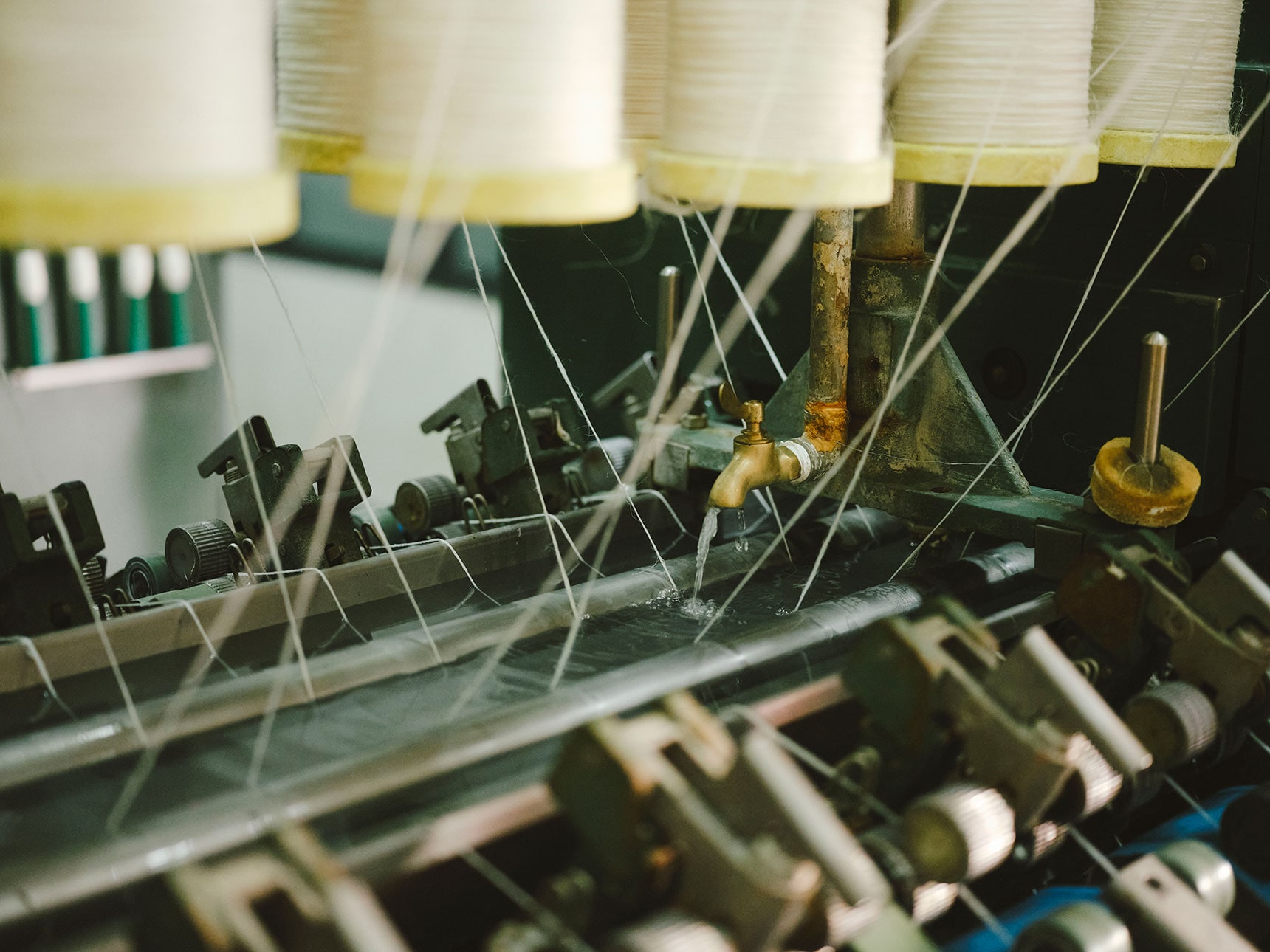
このように水に濡れると強くなる性質を持つリネンは、丈夫で長持ちするのが特長です。洗うほどに柔らかな風合いとなり、肌に馴染む変化を楽しむことができます。フランスでは、何代にもわたって受け継がれてきたシーツやテーブルウェアなどのリネンを見せていただく機会もありました。
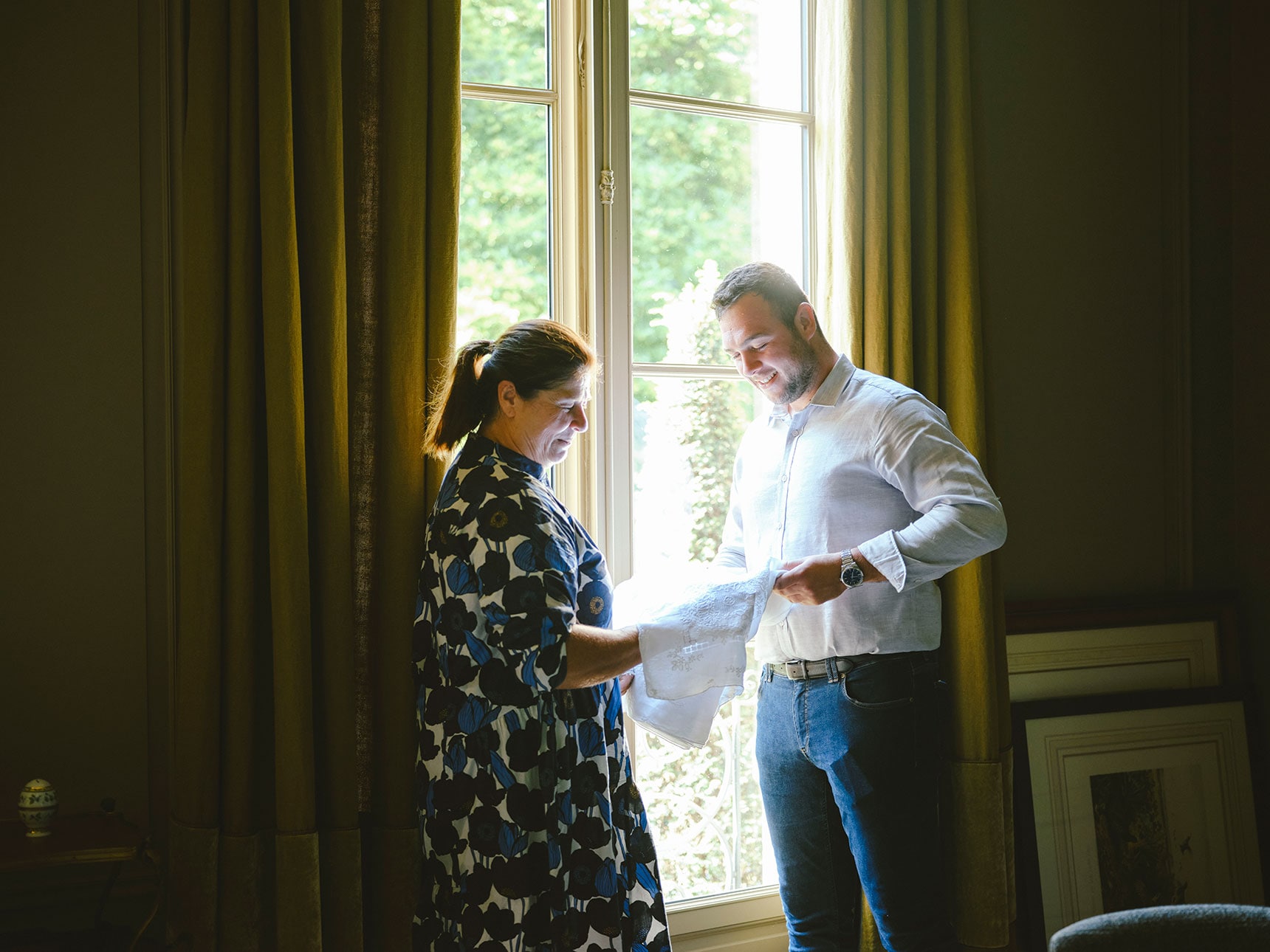
Linen possesses the remarkable property of becoming stronger when wet, making it exceptionally durable and long-lasting. With each wash, it develops a softer texture, allowing you to feel the change as it becomes more and more comfortable against your skin. In France, we also saw linen items such as sheets and tableware that had been passed down through generations.
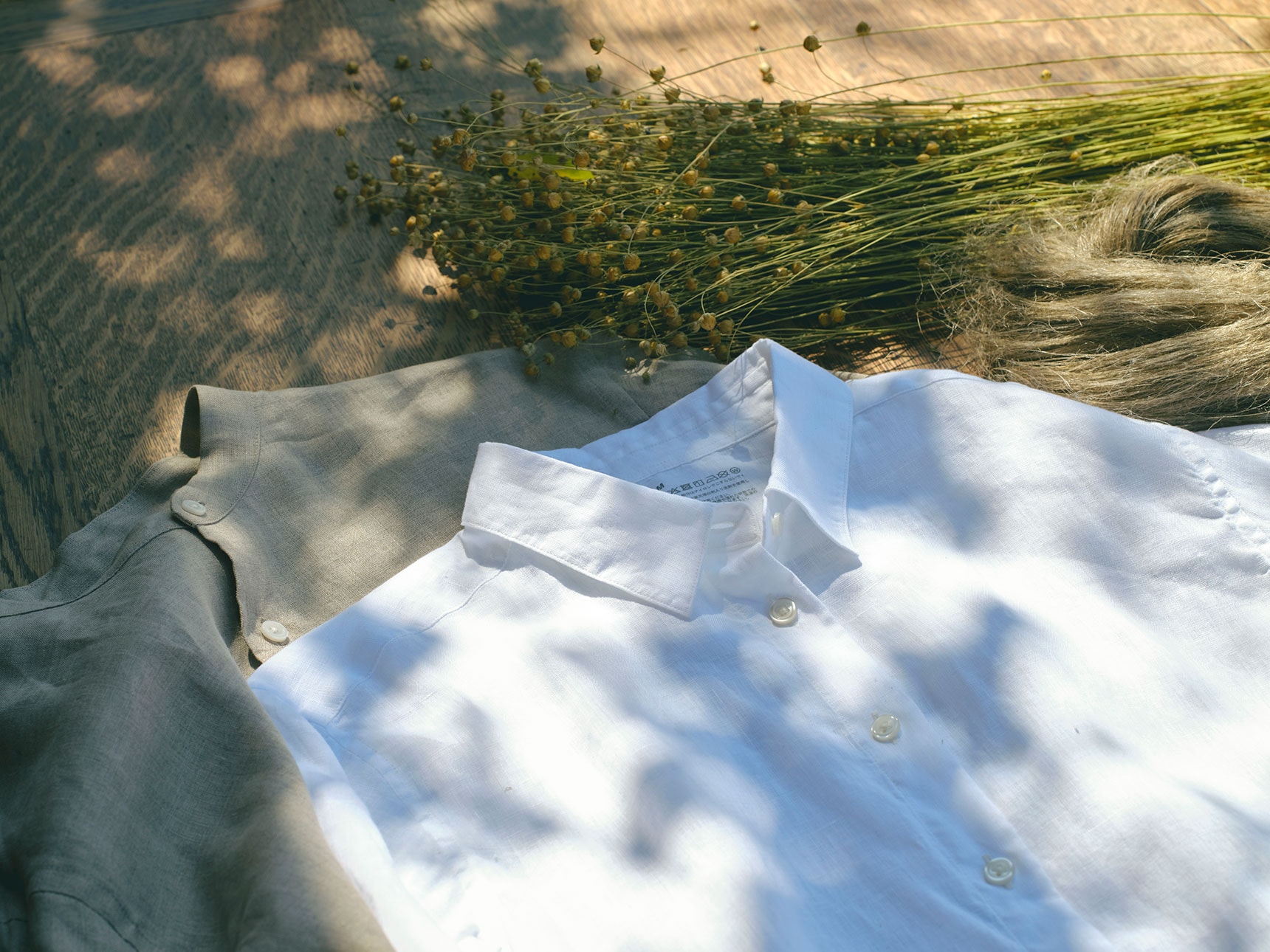
栽培の環境負荷が低いだけでなく、長く使い続けられるという視点でも優れているリネンは、深い歴史を持ちながらも未来を紡ぐことのできる天然素材です。
A natural, durable, and low environmental impact material that is made to be used for a long time. Linen has a deep history, and continues to play an important part of our future.